Friday, December 14, 2012

Power Up, Power Down


I got a copy of the last issue Nintendo Power Magazine today. Apparently, my subscription ran out right before the final issue came out and renewing to buy a single magazine was not an option. I had to buy one from a bookstore and it took me awhile to track it down. It would have been a shame if I missed the final piece. I've had that subscription since 1994, since back when subscribing to Nintendo Power was age-appropriate. Most of my friends (like normal people) quit on game magazines when they left their teens. I thought about dropping mine, but no matter how old I grew, Nintendo Power always had some feature that held interest to me. First it was the comics, then RPG strategies, game previews, interviews with game designers, and, most recently, community crafts and cosplay.

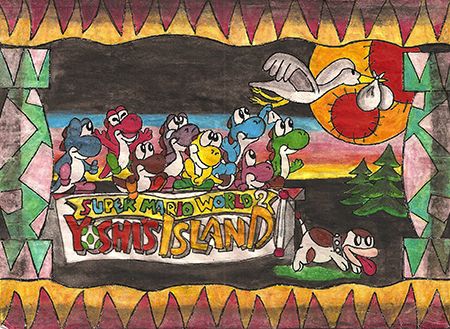
I had recently sent some photos of my Mario statues, but they never used them. But don't feel bad for me. They published one of my watercolors back in 1997, back when I needed the boost a bit more.

(Here's a copy of my Yoshi's Island watercolor. It ran in issue 92.)


My friends never seemed to find it odd that I still collected Nintendo Power into my adulthood. I guess it must make sense with my personality. But I think they liked the idea that someone in the circle was still collecting. As long as one of us kept going, everyone else could look in if they ever felt the need. 

Looking at my shelves, I'm reminded of those past eighteen years of my life. I can't explain it, but something about old video games connects us of where we were when we first played them. Nintendo Power seems to have encapsulated that feeling. I understand why so many fans are sad to see it go.

Why have game magazines have fallen out of fashion? Online communities and game websites have made them less necessary. Which begs the question: will today's early adolescents get the same warm feelings about their websites that we adults once felt for Nintendo Power? Check what kids are saying in the online forums. If the site is well-established, well-designed and friendly enough, it's already happening. If you run a gaming site, it's nice to keep in mind that you're making a community for young people. You're affecting their childhood memories, so give them a good show. It's nice to know kids can still find places to share their interests and fit it. It's just a shame they won't have old magazines as artifacts to remind them of those times. Like I do.

-Marj

Tuesday, December 11, 2012

Christmas Rush


So who's started Christmas shopping yet? The buying season seems to have calmed down some after its unusually stressful start on Black Friday, when some stores decided to open on Thanksgiving day itself (what a poor way to start the holiday season.)

As soon as Christmas preparations become stressful, the cynics emerge, declaring that we shouldn't celebrate Christmas or we need to change the way we celebrate because it's too much trouble, and/or Christmas has become too corrupted to do us any good anymore.

I dislike defending Christmas. It makes me feel dumb. After all, anyone who criticizes Christmas is usually making logic based arguments about ending a culture of greed, saving money, and generally being more responsible. Meanwhile any counter-arguments, no matter how well thought-out, somehow always sound like they are defending consumerism, the status quo, and cartoon reindeer. I feel like I'm on the more childish/less intellectual side of things.

Then, around last Christmas, something occurred to me: the real reason why I defend Christmas and all its inconvenient customs. It's actually good that the holidays are demanding. Because the demands they put on our time and money aren't just brought on by Christmas. They're brought on by having people in our lives. We should be making time to get together with friends and families. We should give things away to make others feel appreciated. But imagine if there were never any occasions that required us to do these things. Most of us would put it off and never get around to it if we didn't have a holiday deadline (I know I would).

Instead of seeing holidays as bullies who shake you down for your time and money, try seeing them as stern parental figures who remind you that you should be making an effort to go visit your brother and bring him something.

These thoughts probably won't make your prep work any easier, but they might make your next trip to the mall a little easier to stomach.

-Marj

Monday, November 19, 2012

Does Not Compute

I'm writing this post from my shiny new computer, which is, surprisingly, the second computer I've ever owned.

I got my original Mac Book in 2006 and upgraded it a bunch of times. I doubled the RAM within the first year, replaced the hard drive two years ago, and went through more rechargeable batteries than I want to remember. I liked my first computer and was content to just keep rebuilding it. But it turns out, even if you keep the hardware and software current, laptops have a finite life span. My old computer has more than its share of dings and scratches. The hinge is loose and I literally have a piece of masking tape holding one of the latches on. But the cosmetic damage wasn't the problem. Too many internal parts were wearing out. The disk reader quit working, it has trouble holding wifi signals, and the screen as been gradually growing darker for some time now. When you work in visual arts, the screen is kind of important.

Now I have a new Mac Book Pro. It has all the features I want and all of them work as they're supposed to. Having nothing broken feels like an embarrassment of riches.

I'm not going to get rid of my old computer just yet. I'd like to use it for traveling and maybe let my art students borrow it from time to time. Before it goes into active retirement, I'd like to take a moment to remember all of its accomplishments:


  • I did the last 1/4 of my animations on it, back when I was a character animator for a computer game.
  • I used it for all demonstrations and archival work for the art classes I teach on weekends.
  • I used it to demonstrate painting in Photoshop to my former online class.
  • It got me through grad school when I earned my master's degree.
  • I learned HTML on it and used it to write all my websites.
  • I prepped and colored every episode of Urban Underbrush and Draconis Wicked with it...until now.


It really had a wonderful life. I look forward to wearing out the next one.

-Marj
www.lepusstudios.com

Wednesday, November 7, 2012

Wreckin' Machine

I saw Wreck-It Ralph last weekend. It was pretty much what I hoped it would be: a cute story with video game references all neatly bound together under the veil of Disney style animation and Pixar style humor.

This movie is a big deal for the Rishel Family, and not just because so many of us are animation fans and/or casual gamers. It’s because my cousin Brian worked on the film. Brian has been doing behind-the-scenes stuff for Disney for many years, but this is the first time he’s contributed so much to a blockbuster movie. The next time you watch Wreck-It Ralph, look for Brian Rishel’s name in the credits. He’s the Post Production Lead Title Designer (it shows up shortly after the music credits). Congratulations, Brian. You’re finally getting the recognition you deserve.


If you haven’t seen Wreck-It Ralph yet, do yourself a favor and don’t read any reviews except mine. With this kind of story, reviewers won’t post spoilers, but they will be tempted to give hints about the plot. And, much like a real video game, hints can give too much away. All the threads should unravel nicely on their own, as long as you don’t go pulling on any of them too soon.

Okay, now about the movie itself. If you’ve seen the trailers, you know that Wreck-It Ralph is the story of a video game bad guy who is tired of being the villain. He can’t change the rules of his own game, so he travels to other games where he might have a shot at being the hero. On the surface, this looks like another story about a protagonist trying to improve his life while proving all the doubters wrong. It’s really a story about the nature of heroism. And the world of video games is a great place to explore the concept of heroism. If the moral had been about love, confidence, loyalty or any other popular theme, it would have been a waste of a theme. As the story begins, we learn that Ralph wants to be a hero so that people will treat him better. So game-hopping Ralph goes through the motions of being a hero without helping anyone. (Good Guy Ralph actually makes things much worse.) When Ralph forgets about his own quest and focus on helping others, he finally starts becoming the person he wants to be. Wreck-It Ralph has a good, real moral that isn’t explored often enough in these kinds of movies: You can’t be a hero to make people like you. You have to like people enough to be heroic for them.

But the best thing about Wreck-It Ralph is that the creators seem to get video games. Its quite common yet always disappointing to watch a show based on something that the authors themselves don’t understand (like Dreamworks movies and Dr. Seuss stories or family sitcoms and…pretty much any topic you can think of).  Wreck-It Ralph was made by people who grew up on video games and were ready to pour all that knowledge and love into the crafting their digital world.

And if your local theater still keeps it’s little corner arcade going, you can bet that you’ll want to give those old games a second look on your way out.

-Marjorie Rishel
www.lepusstudios.com


Wednesday, October 24, 2012

Back to School Survival Guide #3: Pranks for the Memories (Part Two)

We’re back with Part Two of the Back to School Survival Guide on jokes and pranks.

(Honestly, I did not expect to take so long to finish this. Back to school stuff seems a little out of place when it’s running in late October, but I promised you a part two, so a part two you shall have.)

This time, I’m breaking down some popular jokes to explain why they work or don’t work. If you’re not a student, you may want to read this anyway. There are some good bits of joke etiquette in here, somewhere.

Running Gags


A running gag is a repeating joke. These gags are usually effective on TV but they don’t always work in real life. Usually, there’s an easy way to tell if a gag is working: The more people join in, the funnier the joke is. If you are the only person participating in the gag, then you are probably the only person who thinks it’s funny. Don’t discourage anyone from playing along.

Inside Jokes

An inside joke is a private joke shared by a small group of people. Often, inside jokes are personal or embarrassing, which somehow makes them funnier. There’s usually nothing wrong with inside jokes, except when outsiders think that the joke is about them. Imagine that you’re walking past a small group of people who suddenly start laughing. You ask them what’s so funny and they all get quiet and say that it’s nothing. It’s easy to suspect that they’re laughing at you, right? The group knows this, but they can’t explain themselves without revealing their embarrassing secrets. If you’re part of a group that uses inside jokes, prepare a safe explanation in ahead of time. So when someone asks you “what’s so funny?” you can give him a vague, but reassuring answer, like, “We were remembering something stupid that happened on Friday. It’s nothing serious.”

Making Fun of Teachers

All teachers know that their students want to make fun of them. (This even applies to some college professors.) Frankly, your teacher would rather you vent your frustrations with harmless words than break down in the classroom. They’ll be good sports as long as you follow one simple rule: Don’t make fun of an adult who is in the room with you. Putting down your teachers right in front of them makes it look like they don’t deserve respect. Be polite. Make fun of your math teacher in science class, your science teacher in music class, and when you’re on the bus, make fun of everybody but the bus driver.

Toxic Jokes: Pranks to Avoid

A few popular pranks that are more trouble than they’re worth. Plus they can hurt you as much as your victims. Avoid them at all costs.

Pranking Your Helpers

Springing pranks is like setting traps. The tricky part is getting someone to walk into your trap. An easy way to do this is to ask people to do things for you. For example, you might think a funny prank would be to lock someone in a supply closet. But no one is in the supply closet, so you ask your friend if he would please, please, please put some heavy boxes away for you. The trouble with this strategy is that it only punishes people who are nice to you. The obvious problem here is that you are teaching people to never help you. The less obvious problem is psychological. People are conditioned to expect a reward for good deeds, usually in the form of a “Thank You” or some other kind words. Whenever someone who expects a reward is punished instead, it creates intense feelings of betrayal and resentment. You may be dishing out more of an emotional sucker-punch than you ever intended.

Scolding and Teasing

When people (both kids and adults) yell or scold, a part of them is saying, “It is VERY important to me that you listen to these words.” If you choose this moment to joke around, you are sending the message, “I won’t listen, and I will keep others from listening too.” Humor doesn’t fix this kind of situation. It throws gas on the fire. And it may cause the yellers to direct their anger at you. If you think yelling and scoldings are unfair, you don’t always have to put up with them, but you should find a safer way to deal with it.

Hiding People’s Stuff

This is a crime of opportunity. Someone leaves something unattended, his friends stash it, and then they watch him panic when he finds it missing. The trouble with this prank is that there’s no good way to end it. If the prankster returns the missing items right away, people usually complain that the joke ended too soon. So everyone has to sit and wait awkwardly for the right time to resolve the situation. This can make the prankster can feel almost as trapped as the victim. Plus, it’s a tense situation, and tension only makes people expect a bigger punch line. In the end, the missing stuff is either returned safely, returned damaged, lost or stolen. None of these outcomes are particularly funny and they leave everyone feeling unsatisfied. This one just isn’t worth the trouble.

In Conclusion…

You may be asking yourself, “Hey, I’m just trying to have fun, why do I have to follow so many rules?” Bringing humor means that you’re adding something new to an ordinary situation. And if you’re the person who’s added something new then you are responsible for the results. Jokes and pranks are a bit like pets. People enjoy their antics, but if they run wild and cause trouble, then it is the owners’ responsibility to keep them in line.

-Marj
www.lepusstudios.com

Wednesday, September 26, 2012

Back to School Survival Guide #3: Pranks for the Memories (Part One)

Fall is officially upon us, so I’m writing another installment of my annual “Back to School Survival Guide.” I take my experiences as a student and my experiences as a teacher and use them to come up with some practical advice for school children. If you’re not in this age group, you may choose to read anyway for my amusing insights or you can just skip it and wait for the next one.

In past years, I’ve written about getting help from teachers and spotting bullies. This year I want to write about something more fun: classroom jokes and pranks.

Have you ever noticed how certain kids pull jokes all the time while others get busted whenever they open their mouths? Some kids just know what they can get away with. I’m going to try and explain why some jokes are okay while others lead to problems. (Disclaimer: Your results may vary, depending on school culture and teacher’s sense of humor. Please put advice from parents, teachers and principals ahead of the random advice you get from strangers on the internet. And don’t use my blog as an excuse for bad behavior. I don’t need that kind of trouble.)

Are Jokes Good or Bad?

Secretly, most teachers like a good joke. After all, jokes from students can relieve stress, improve student socialization, and develop the creative parts of the mind. These are all things that good teachers want to encourage. But a teacher’s first mission is to make sure you learn something. So if your jokes disrupt the lessons and get in the way of that goal, your teacher will try to stop to you.

Pranksters, What’s Your Point?

Your intentions, good or bad, make a difference. An experienced teacher can usually spot the difference between friendly banter and mean-spirited humor. In other words, teachers are more likely to let you slide if you’re not trying to hurt anything. So what is your own goal for your jokes and pranks? It should be to give everyone a laugh and, maybe, show off how clever you are. If you want to put down other students, humiliate your teacher, or trip up today’s lesson, change your mission. Otherwise, you are better off skipping the jokes all together (and possibly finding yourself a good therapist.)

Besides, considerate jokes are usually funnier (at least in schools, anyway.) A lot of kids feel stress, or guilt from mean jokes. Even kids who laugh along often feel conflicted when others are being hassled. Don’t be mean and you’ll amuse more of the people that you’re trying to impress.

Pardon the Interruption.

Making jokes on your own time (lunch, recess, bus rides, etc.) should never be a problem. But, let’s say you’re in class. Can you jump in without landing in trouble? Maybe, maybe not, but here are a few tips that could improve your odds:

First, don’t wear out your welcome. In my experience, people can usually handle two or three interruptions before taking it seriously. If you or someone else has already interrupted a class, you may have used up your joke quota. If you think it's safe, keep the interruptions short. A fast joke is less likely to get you in trouble than a long, drawn out one. And be sure to pace your jokes. Five jokes spaced out over two hours is less annoying than five jokes back to back.

While you're at it, try to stay on topic. Jokes about today’s lesson prove that you can pay attention, while you’re having fun. And your jokes might help other students remember the lessons and do better on tests. That would make you a hit with the students and teachers.

Finally, and perhaps, most importantly of all, work on your timing. Good comedians say that timing is the most important part of humor. This is doubly true in schools. Avoid interrupting the most important parts of instructions or the key moments in discussions.

Taking Responsibility


Sometimes, no matter how careful or well meaning you are, someone may still get mad at your jokes. If this happens out in the real world, you can sometimes tell people to lighten up. But school rules are different. If someone in charge tells you off for clowning around, you say, “Sorry, it won’t happen again.” And then, unfortunately, you have to mean it. Lie low for the rest of class, maybe the rest of the day, to prove that you're serious. And don’t drag out your apology. A long, disruptive apology is often worse than whatever you’re apologizing for.

Heck is Other People

One of the worst things that can happen to you is having someone else take your joke too far. You might make a short, tasteful joke, only to have some other students add their own mean, disruptive comments on top of yours. Then you all end up looking like jerks. And if you try to explain that these other kids aren’t a part of your act, your teacher will think that you’re causing a disruption and the other kids will think you’re a traitor. The best thing to do is to keep quiet until things settle down. You can explain yourself to your friends and teachers after class. If anyone is still mad at you, you have to accept that. After all, the disruption may not have been your fault, but it was a result of your actions.

Summary

If you’re ever stuck, remember these basic rules of school humor: Don’t be disrespectful and try to keep it short. Stick to this, and maybe you’ll have your fun without serving any time in detention.

Next time, we’ll explore the kinds of jokes people play and which ones work. Until then, please prank responsibly.

-Marj
www.lepusstudios.com
Sunday, September 16, 2012

Welcome, New Gallery

Over the past few weeks, you may have heard me mention working on a special side project for my website. Actually, I haven’t really been working on it for the past few weeks. I’ve been working on it for about ten years.

I’ve recently expanded the Gallery section of Lepus Studios to include some of my fan art. Visitors can now explore my Super Mario Sculpture Gallery, a set of tiny polymer clay sculptures, based on Nintendo’s beloved characters. And (there’s no way to say this without sounding a little crazy) the collection has about 350 different pieces.


Why did I do it? About ten years ago (long before I was drawing webcomics), I was really interested in miniature sculptures. I wanted to make myself a set of Super Mario characters (I’ve been a huge Nintendo fan since I was twelve years old). I started with a little Mario (small enough to stand on a dime), and then I built the other characters loosely to scale with him. However, I never set up any parameters about which characters were important enough to make the cut. In a month I had about fifty characters. The next batch doubled my collection. For the last decade I’ve been adding to the horde each time I finish a new game. I usually only make a handful of little guys at a time, but it adds up.

Of course, I can never replicate every character. Over twenty years of Super Mario games have generated more characters than I could keep up with. I had to set some rules about which ones should be included:
  1. I only sculpt characters. No props, items, or power-ups. 
  2. I only sculpt one version of each character. No different statues for Fire Mario, Cloud Mario, Tanooki Mario etc. 
  3. I don’t add any new characters unless: A: they appear in more than one game, B: they play a key role in one game, or C: I find them interesting and really want to try sculpting them. 

Until now, I never intended to make my fan art public. It’s always been something I did just for my own amusement. But this stuff is starting to pile up, and it feels strange to keep it all to myself.

To be fair, I’ve sited Nintendo as the legal owner of all Super Mario characters. Nothing in the statue gallery is for sale. I’m not even running any advertisements on the pages that show Nintendo characters so I won’t directly receive any profits from displaying them (aside from the attention it might bring.)

So if you enjoy Nintendo games, miniatures, or just want to see how strange my work can get when I have time on my hands, please Check Out the Gallery. 

-Marj
www.lepusstudios.com